The AI Skill Gap at Work: Why Ambitious Men in 2026 Are Learning to Manage AI, Not Just Use It
Most men treat AI like a faster Google search. The men actually getting ahead in 2026 treat it like briefing a new hire — and the difference shows up in every review cycle.
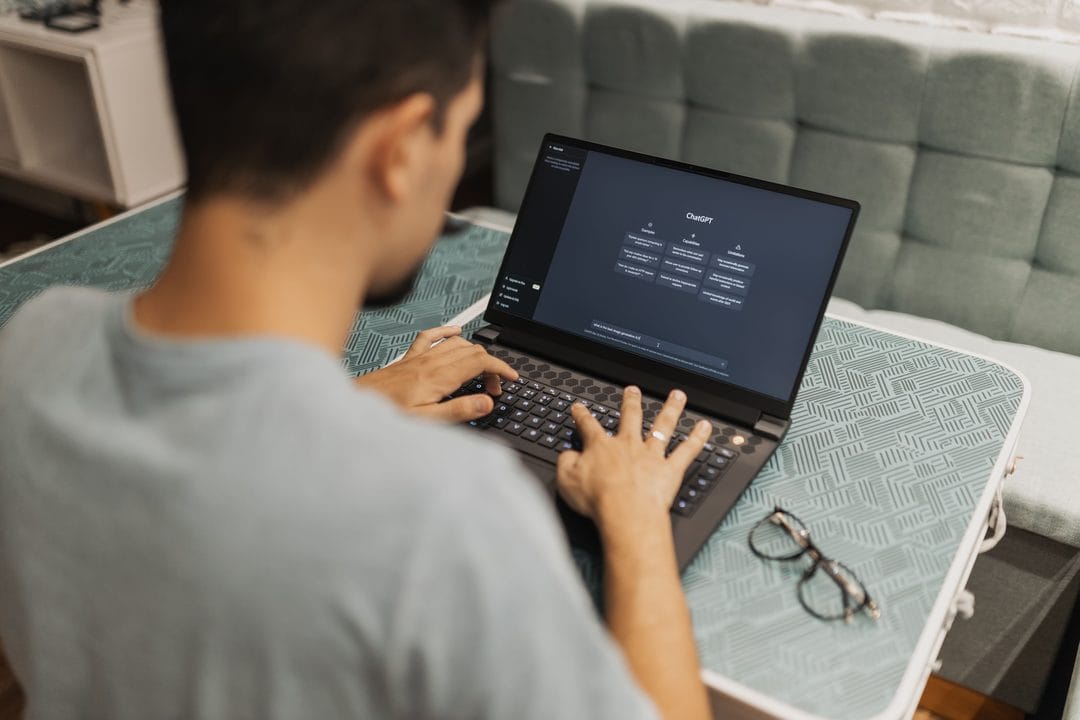
A colleague on your floor finished a market analysis in twenty minutes last month that would have taken you most of an afternoon two years ago. You asked how. He shrugged and said he'd "run it through Claude first" — not as a shortcut, but as a first pass he then spent fifteen minutes correcting, tightening, and making his own. The gap between the two of you wasn't intelligence, and it wasn't effort. It was a skill nobody put on a job description, and by mid-2026 it's quietly become the difference between the men getting handed the interesting projects and the men still doing the analysis the slow way.
The Habit That Splits the Room
Most men who use ChatGPT, Claude, or Microsoft Copilot at work treat the tool like a faster version of Google — type a question, take the first answer, move on. That's the search-engine habit, and it caps out fast: the output stays generic because the input stayed generic. The men pulling ahead this year use the same tools completely differently. They treat a chat window the way a decent manager treats a new hire on their first week — giving background, stating the actual goal, flagging the constraints nobody would guess from the question alone, and then reviewing the draft with a red pen instead of accepting it wholesale. This isn't about typing longer prompts for the sake of it. It's about recognising that the model has no idea what your manager actually wants, what got rejected last quarter, or which client is touchy about jargon — and that unless you say so, you'll get competent-sounding output that misses the point in ways that take longer to fix than writing it yourself. Ask two men in the same department to summarise the same twelve-page vendor contract and you'll often get two completely different levels of usefulness back, not because one has a better tool, but because one told the model what the summary was actually for and the other didn't.
Brief It Like You'd Brief a New Analyst
Here's the shift that actually changes the output: stop asking questions and start giving assignments.
A new analyst on their first week doesn't produce a usable memo from "write something about the Q3 numbers." They need the audience — is this going to your director or the client — the format precedent this team already uses, the specific angle you already have in mind, and permission to ask a clarifying question if something's ambiguous. Treat the AI the same way and the quality jump is immediate. Instead of "summarise this report," try: "You're writing this for a director who's already sceptical of the vendor — pull out anything that supports delaying the contract renewal, keep it under 200 words, and flag if the pricing structure changed since last year's version." The difference in output isn't marginal. It's the difference between a first draft you can send with light edits and a first draft you have to rewrite from scratch.
Where This Actually Shows Up in Performance Reviews
No manager writes "strong AI delegation skills" on a performance review — that's not a line item anywhere, and it's unlikely to become one. What they do notice is that certain people on the team consistently turn around first drafts faster, catch more in a first pass, and seem to have more bandwidth left for the parts of the job that actually require judgement. January and February 2026 review cycles are already surfacing this pattern in mid-sized firms: the men who complain there's "not enough time" for stretch projects are often the same men still writing every email and every summary from a blank page, while colleagues doing the same volume of work have quietly built a habit of offloading the first 70% of a draft and spending their saved time on the last 30% that actually needs a human read. The catch is that this only works if the person doing the offloading still owns the judgement call at the end — hand over the thinking along with the drafting, and it shows immediately in meetings when someone asks a follow-up question you can't answer because you never actually engaged with the material. None of this needs to be dramatic or visible to count: it shows up as one fewer late night before a deadline, one extra stretch assignment offered without being asked for, one meeting where you had the follow-up answer ready instead of promising to "circle back."
The Trap Nobody Warns You About
There's a version of this that backfires, and it's worth naming directly: outsourcing the thinking, not just the typing. A first draft from Claude or ChatGPT is genuinely useful for structure, phrasing, and catching obvious gaps — it is not a substitute for having an opinion about what the recommendation should be. Men who lean on AI output without forming their own view first tend to get caught out in exactly the moment it matters most, standing in a meeting unable to defend a number they never actually checked. The tell is always the same: fluent delivery, then a blank stare the moment someone asks "why this option and not the other two." Use the tool to speed up the parts of the job that are mechanical — first drafts, formatting, restructuring a messy set of notes — and keep the parts that require an actual stance firmly in your own head before you ever open the chat window.
What If Your Job Won't Let You Paste Anything In?
A fair objection: plenty of jobs — law, healthcare, financial services, anything touching client data — restrict or block public AI tools outright, and pasting a client contract into a consumer ChatGPT window is a fireable habit at most compliance-conscious firms. That objection is real, but it doesn't excuse the skill gap; it just moves where you practise it. Most banks, law firms, and insurers that locked down public tools in 2023 and 2024 have since rolled out an enterprise-licensed alternative — Microsoft 365 Copilot with tenant-level data controls, or an internally hosted model — precisely so staff aren't stuck without one. If your firm hasn't done that yet, the habit still transfers: build the brief-writing discipline on your own reading, a personal project, or a professional certification you're studying for, so the muscle is already there the day your employer switches on the sanctioned tool. Waiting until it's officially rolled out to start learning how to brief one properly just means starting from zero at the same time as everyone else on your team.
A Twenty-Minute Habit Worth Building This Month
Building this habit doesn't require a course or a weekend project — it requires deliberately over-explaining for two weeks until it becomes automatic. Before your next report, email, or analysis, try writing the brief first, the way you'd hand it to a junior colleague:
- Who's actually going to read this, and what do they already believe going in?
- What decision does this need to support — not the topic, the actual decision it needs to move forward.
- Any numbers, names, or constraints the model can't guess from context — list them, because it will invent plausible-sounding ones if you don't.
- What "done" looks like: length, tone, format, and what to leave out.
Do this for a fortnight and the improvement compounds — not because the tool got smarter, but because you got better at the one skill that was always yours to build: knowing exactly what you need before you ask for it. Most men who actually try this notice the shift by the second week, when writing the brief starts taking less time than writing the vague, one-line version ever did.
The Part That Doesn't Show Up on a Certificate
There's no course called "AI Delegation 101" worth signing up for, and most of what's sold under that name is generic prompt lists that ignore the actual job you do. The skill in question is older than any AI tool — it's the same clarity of thought a good manager brings to handing off a task to a junior hire, applied to a new kind of colleague that happens to respond in seconds instead of days. Men who already had that clarity — the ones who wrote a clean brief before AI tools existed, the former project managers and the ex-military among them especially — picked this up almost immediately. Men who never had to be precise about what they wanted, because they were doing all the thinking and typing themselves, are the ones finding the adjustment harder than expected, and a fair number of them are still blaming the tool for output that a clearer brief would have fixed in one round.
The men who'll look back on 2026 as the year they got noticeably better at their jobs won't be the ones who bought a course on "AI prompting." They'll be the ones who got sharper at knowing what they wanted before they asked for it — a skill that was never really about the software in the first place.