The Pomodoro Technique Is Overrated — Here's What Actually Works for Deep Tasks
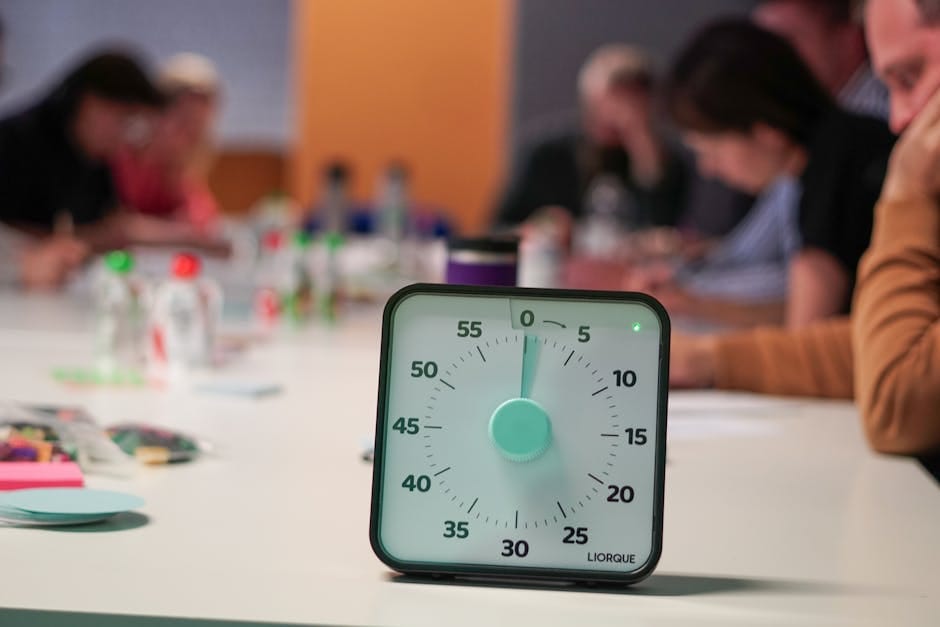
Francesco Cirillo invented the Pomodoro Technique in 1987 using a tomato-shaped kitchen timer. The method — 25 minutes of focused work, 5 minutes of break, repeat — was designed for a specific person: Cirillo himself, a university student trying to study for exams with a short attention span. It worked for him. It has since been rebranded as a universal productivity technique, marketed to executives and knowledge workers, and sold through hundreds of apps and methodologies. For shallow tasks like clearing email or making phone calls, it's fine. For anything that requires deep cognitive work, it's actively counterproductive — and the reason is basic to how the brain processes complex problems.
What the Research Actually Says About Focus Cycles
Cognitive psychologists studying flow and deep work consistently report that the warm-up phase of demanding mental work — the time it takes to fully load a problem into working memory, orient yourself to it, and start making progress — is somewhere between 15 and 25 minutes for most people on most hard tasks. Mihaly Csikszentmihalyi's flow research, spanning the 1970s through the 2000s, suggests that once you're in flow, disengaging from the task — even briefly — costs you most of the ramp-up time again to get back.
Here's the arithmetic problem. The Pomodoro Technique gives you a 25-minute block to do work. Maybe 15 of those minutes are warm-up. You get perhaps 10 minutes of genuinely deep processing. Then a 5-minute break. Then you start again — and the brain has mostly unloaded the state. Back to warm-up.
For studying for an exam (the original use case), this is arguably fine. The cognitive load is medium, the material is recallable, and the break prevents mental fatigue. For designing a complex system, writing a serious strategy memo, debugging a hard bug, or working through a legal argument, it's a disaster. You never actually get deep.
The Tasks for Which Pomodoro Genuinely Works
To be fair: there's a real set of tasks where the technique shines.
- Email triage. Short-context tasks where each unit is independent.
- Reviewing documents with a checklist — procurement review, contract redlines, vendor comparisons.
- Studying in the exam-prep sense. Reading chapters with interspersed recall.
- Grinding through administrative work you find genuinely unpleasant — the timer acts as a commitment device.
- Getting started when you're procrastinating. A 25-minute commitment is small enough to bypass resistance.
For all of these, the 25/5 rhythm is a net positive. The cognitive context doesn't need to be preserved across segments, and the breaks prevent the kind of dull drift that happens when tedious work goes on too long.
What Actually Works for Deep Tasks
The replacement model, which has a lot more support in the flow research, is longer blocks with deeper breaks. Specifically: 90 to 120 minutes of uninterrupted work, followed by a 15 to 20 minute break that genuinely disengages you from the problem — a walk outside, a conversation about something completely different, food, daylight.
The 90-minute figure isn't arbitrary. Ultradian rhythm research — popularised by Nathaniel Kleitman in the 1960s and revisited regularly since — suggests the human brain cycles through peaks and troughs of focus capacity in roughly 90-minute intervals. You can fight this cycle and force longer blocks, but you'll extract diminishing returns. You can also shorten it, but you lose the depth you built up.
Two 90-minute blocks in a morning, with a genuine 20-minute break between, is roughly the upper limit of what most people can sustain on truly hard cognitive work. Beyond that, you're in the territory of performance decline — you're still typing, but the quality of what you're producing has dropped below what you'd produce tomorrow morning fresh.
The Specific Practices That Separate Deep Blocks from Pomodoro Blocks
1. Pre-commit the target
For a 90-minute block to pay for itself, you need to start it with a specific, physical target. Not "work on the strategy memo" but "finish draft of section 3 of the strategy memo through the market-sizing chart." The target has to be concrete enough that at the end of 90 minutes you know whether you hit it.
This is the opposite of Pomodoro's "work on any task for 25 minutes and stop." The long block needs a specific anchor to keep the session on-rails. Without one, you'll drift, open a second tab, respond to "one quick email," and the depth never arrives.
2. The warm-up cost is paid once
The economic case for the 90-minute block is that you amortise the 15-minute warm-up cost across more productive work. In Pomodoro: six 25-minute blocks over three hours gives you roughly 60 minutes of deep work after subtracting warm-ups. In the 90-minute model: two 90-minute blocks with one warm-up each gives you roughly 150 minutes of deep work over the same three hours. The difference, compounded over a year, is substantial.
3. The break has to be genuinely disengaging
The 15-20 minute break between blocks is not a Twitter scroll. It's not a "quick email check." It's a walk, a conversation with someone about the weather, food, water, daylight. The research on attention restoration, from Kaplan and Kaplan at Michigan in the 1990s, is specific: restoration happens when the environment is qualitatively different — outdoor, soft fascination, physical movement. Staring at the same screen is not restoration.
If you skip the real break, the second block will be noticeably worse than the first. You will know it. You'll feel fog around minute 40, and the output will show it.
4. No blocks after 15:00 for most people
Circadian research shows most people's cognitive peak is between 09:00 and 11:30, with a secondary smaller peak around 16:00 to 17:30 for some, though less for others. Deep blocks are best stacked in the morning. Afternoon is better for meetings, calls, routine work, and — for a fraction of people — for a final deep push before end of day.
The night-owl exception: if you genuinely work better at 22:00 than 09:00 (about 15% of the population, according to chronotype research), invert this. Your deep blocks are 22:00 to 01:00. Meetings in the afternoon. This isn't weakness — it's chronotype.
The Hybrid Model That Actually Gets Used
In practice, most knowledge workers run a hybrid model, even if they don't call it that. Two or three 90-minute deep blocks per day for the hardest work, plus shorter Pomodoro-style bursts later in the day for administrative grind. The deep blocks are scheduled and defended. The admin bursts are opportunistic — 25 minutes here, 25 there, whenever a gap appears.
What you should not do: apply Pomodoro uniformly across your whole day. You will extract maximum effort from your cognition on tasks that don't need it, and you'll fragment the tasks that absolutely do. The default advice in most productivity books gets this exactly backwards.
The Cultural Problem with Pomodoro
The subtle reason Pomodoro persists despite its poor fit for deep work is that it's measurable. You can track how many "tomatoes" you did. You can show it to a manager. You can gamify it in an app. It feels like productivity because it generates visible activity.
Deep work blocks are harder to measure externally. At the end of a 90-minute block, the evidence is a finished section of a memo, a solved bug, a refined hiring decision — outputs that don't have a neat count you can show on a dashboard. Pomodoro is optimised for the worker who needs to look productive. Deep blocks are optimised for the worker who needs to be productive. The two are not the same thing, and one is more visible than the other.
This matters because many people reading this work in environments where visible productivity is rewarded and actual productivity is assumed. The political move, if you're in that world, is to run your real work on deep blocks and leave just enough visible activity — responses, status updates, visible presence in meetings — to satisfy the measurement culture. It's a tax, but it's one most senior operators quietly pay.
The One Endorsement I'll Give the Timer
One narrow case where I use a Pomodoro-style timer even for deep work: breaking through a stuck moment. When I've been staring at a problem for 20 minutes and not making progress, I'll set a 25-minute timer and commit to writing badly for those 25 minutes — no editing, no backspace, just type the first thing that comes. The timer turns off the quality filter that's been blocking me. At the end of 25 minutes I have a bad first draft of something. Starting is the hard part. Once I've broken through, I turn the timer off and go back to the 90-minute rhythm.
This is closer to the original Cirillo use case — a commitment device for when your motivation is low. It's not a universal productivity system. It was never designed to be one.