The Real Reason You Procrastinate (It's Not Laziness, and Willpower Won't Fix It)
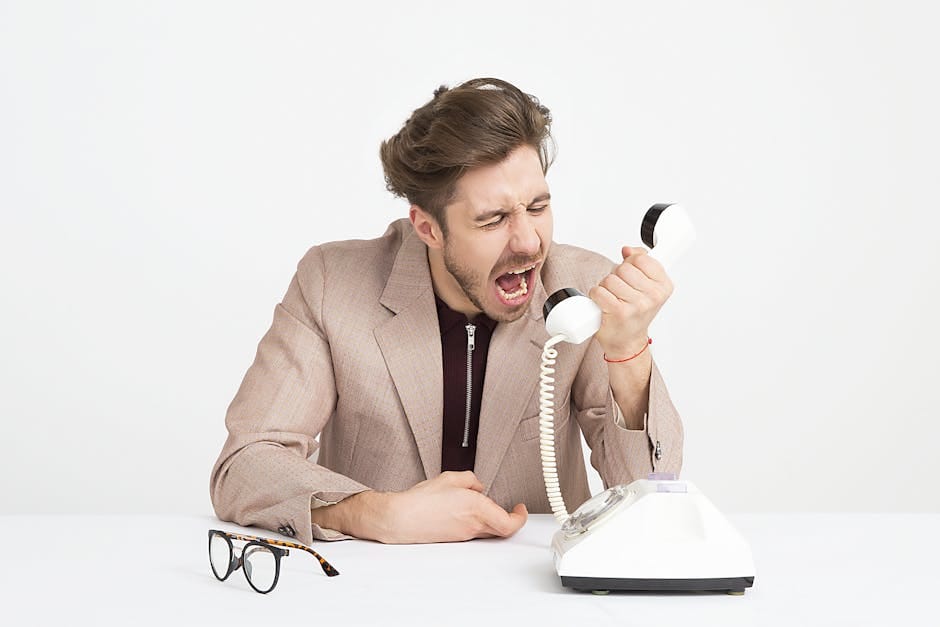
You know the pattern. A big report is due Friday. It's Tuesday, and you've got the time, the brief, the data. You sit down, open a blank document, and immediately feel a vague dread — not panic, not boredom, something closer to a low-grade nausea. You check email. You tidy your desk. You respond to three Slack messages that could have waited. By the time you look up, ninety minutes have passed and the blank document has acquired a title and three bullet points.
Every productivity book in the last thirty years has treated this as a willpower problem. Write down your goals. Use a timer. Reward yourself afterwards. Build better habits. Most of this advice is either wrong or pointed at the wrong target, and the actual research on procrastination, most of it coming out of Carleton University in Canada, points at something different — and more useful.
Procrastination Is Not About Time Management
Tim Pychyl, who ran the procrastination research group at Carleton for 25 years, put it in a single sentence in his book Solving the Procrastination Puzzle (2013): procrastination is an emotion-regulation problem, not a time-management problem. You're not putting off the task because you can't figure out how to schedule it. You're putting off the task because sitting down to it produces an unpleasant emotional state, and doing literally anything else — even boring administrative work — produces a milder, more tolerable one.
The task itself doesn't need to be objectively unpleasant. Often it's a task you've explicitly chosen, one that's aligned with your goals, that pays well, that you'd say you enjoyed in a LinkedIn bio. That's what makes procrastination so disorienting. You're not avoiding work you hate. You're avoiding work you know you want to do.
The unpleasant emotion can be many things. Boredom, certainly. But more often: fear of getting it wrong, fear of being judged, fear of committing to a specific direction when every alternative still feels possible, the raw cognitive load of starting something hard, or — most commonly — ambiguity. Not knowing exactly what the next step looks like. Your brain reads that ambiguity as threat, and a primitive regulatory system swings into action: avoid the threat, feel better, do something else.
Why Willpower Advice Fails
If procrastination were a willpower problem, the standard advice would work. It mostly doesn't. Eat the frog, do the hardest thing first, build an accountability partner, set a deadline — these techniques help at the margin but they don't solve the underlying regulation problem. They try to bully an emotionally regulated system into compliance, and when the pressure drops, the procrastination returns.
Worse, a lot of the advice is actively counterproductive. "You just need to be more disciplined" is the same move as telling a depressed person to cheer up. It deepens the shame, which increases the unpleasant emotional state, which intensifies the avoidance. Pychyl's research shows procrastinators who forgive themselves for procrastinating on a task actually procrastinate less on the next one. The shame spiral makes it worse, not better.
What Actually Works — the Evidence-Based Fixes
1. Reduce the ambiguity of the next step
The single most effective intervention is making the next concrete action stupidly specific. "Work on the report" is ambiguous — your brain can't compute what that means, so it treats it as threat. "Open the Q3 report doc, paste the outline from my notebook, and write the first sentence of section one" is a physical action. Your brain can execute it without emotional overhead.
The rule: if you sit down and feel the procrastination pull, your next action is too abstract. Keep breaking it down until it feels almost insultingly small. Not "draft the email" but "open Gmail, click compose, type the recipient address."
2. The five-minute rule
Commit to working on the task for five minutes. That's it. After five minutes, you're allowed to stop. In practice, about 80% of the time, once you're actually in the task, you keep going — the threatening emotional state dissipates once you're mid-action. The first five minutes is where the friction lives.
The trick: you have to be genuinely willing to stop at five minutes. If you're using it as a gimmick to trick yourself into an hour, your brain catches on inside a week and the trick stops working.
3. Emotion regulation before the task
If you suspect the avoidance is fear-based — fear of judgement, fear of being wrong — name it explicitly before sitting down. "I'm avoiding this because I'm scared the client will hate the draft." Written down. Naming the emotion is a well-documented regulation technique from CBT: it drops the intensity by 30 to 50% in most people within minutes.
If the emotion is boredom, the fix is different — batch the task with something stimulating. Work on it at a coffee shop. Pair it with instrumental music. Or — the uncomfortable option — accept that some tasks are just boring and stop expecting them to feel good while you're doing them.
4. Implementation intentions
Peter Gollwitzer's research on if-then planning is one of the most robust findings in behavioural psychology. Instead of "I'll work on the report tomorrow," you write: "If it is 08:30 and I am at my desk, then I will open the Q3 report and write the next paragraph." The specificity is what matters. The research shows implementation intentions lift follow-through on deferred tasks by 200-300% in controlled trials.
5. The honest diagnostic question
When you catch yourself procrastinating for the third time on the same task, stop and ask: is the task actually the right task? Sometimes the avoidance is data. You've committed to a project you don't believe in, a deliverable that no one actually needs, a version of the work that isn't the version you'd make if you were in charge. If the answer is yes, you don't need more productivity tricks. You need to have a harder conversation with whoever owns the work.
The Procrastination You Should Respect
Here's the piece that the productivity industry never addresses. Some procrastination is a signal worth listening to. You're delaying writing the business case for Project X, and part of you knows Project X is a bad idea. You're avoiding the resignation letter, and part of you knows you shouldn't resign yet. You're putting off sending the contract, and part of you is picking up on something in the relationship that doesn't want to be locked in.
Your conscious mind doesn't always have the evidence yet, but a part of you is computing the situation faster than you can articulate. Pychyl's work doesn't cover this directly, but Gary Klein's research on expert intuition — covered in Sources of Power (1998) — does. Experts often know something is off before they can say why. Procrastination can be that knowing, showing up as avoidance because you don't yet have the words.
The distinction: avoidance that feels like dread and fear is usually emotion-regulation procrastination — fix it with the techniques above. Avoidance that feels like quiet reluctance, the sense that something doesn't quite fit, is worth sitting with for 48 hours before you try to push through it.
The Uncomfortable Bottom Line
Chronic procrastination correlates with depression, anxiety and low self-worth in a way the productivity industry doesn't like to talk about. If you procrastinate on almost everything, almost all the time, you don't need a better calendar app. You need to investigate what's going on underneath — sometimes with a professional. The techniques in this piece work for the ordinary procrastinator stuck on a specific task. They don't fix a life that's become an exercise in avoidance.
The honest version is this: you'll procrastinate on something important this week. Not because you're lazy. Because the task produces an emotional state your brain doesn't want to sit with. Reduce the ambiguity, shrink the first step, name the emotion, and start. The willpower part of the equation is smaller than the internet wants you to think.